

Menopause
In Traditional Chinese Medicine, menopause is known as The Second Spring — a time when the body’s energy begins to shift, inviting renewal rather than decline.
As oestrogen naturally falls, Yin and Yang find a new rhythm. The focus moves from fertility to vitality, from giving outwardly to nurturing inwardly. This season of change asks us to slow down, listen and restore balance — not to fight against it, but to move with it. Hot flushes, mood changes and fatigue are simply signs that the body is asking for care and recalibration.
Through acupuncture, nourishment and self-kindness, women can enter this phase with steadiness, grace and confidence — feeling lighter, clearer and more in tune with themselves than ever before.
Menopause isn’t the end of growth. It’s your Second Spring — the beginning of a new kind of vitality.
Download your free NRQi Studio Menopause Guide “The Season of Change” below.
Let’s Talk About Menopause: The Vocabulary
-
The words below are commonly used by doctors and health resources when talking about menopause. Understanding them can help you make sense of the changes happening in your body and seek the right support.
Perimenopause
The stage leading up to menopause when hormone levels begin to change. Periods may become irregular and symptoms such as hot flushes, sleep disruption and mood changes can begin.Menopause
The point in time when you have gone 12 months without a period. It marks the end of the menstrual years.Postmenopause
The stage after menopause. Hormone levels remain lower and some symptoms may continue, while longer-term health changes can also become more relevant.Hormonal fluctuations
Natural changes in hormone levels, especially oestrogen and progesterone, that can affect mood, temperature, sleep and the menstrual cycle during perimenopause.Oestrogen
A hormone involved in the menstrual cycle, bone health, brain function, skin and vaginal tissue. Levels often become more variable during perimenopause and lower after menopause.Progesterone
A hormone that rises after ovulation and helps regulate the cycle. Changes in progesterone can affect bleeding patterns, sleep and mood. -
Changes to the menstrual cycle are often one of the earliest signs of perimenopause. The words below can help describe what those changes look like.
Irregular periods
Periods that do not come at the usual time or follow the same pattern each month.Cycle length
The number of days from the start of one period to the day before the next one begins. During perimenopause this may become shorter or longer.Skipped period
A cycle where no period comes when expected. This can be common during perimenopause.Heavier bleeding
Bleeding that is stronger than usual or lasts longer than expected.Lighter periods
Periods with less bleeding than usual. Flow may become lighter as hormone levels change.Spotting
Light bleeding between periods or around the time a period is due. -
Menopause can affect many systems in the body. The terms below describe some of the most common physical symptoms women may notice.
Hot flushes
Sudden feelings of heat, often in the face, neck or chest, sometimes with sweating or redness.Night sweats
Episodes of sweating during sleep that can disturb rest and leave you feeling overheated.Fatigue
Ongoing tiredness or low energy that does not always improve with rest.Joint pain
Aches, stiffness or discomfort in the joints, which some women notice more during menopause.Headaches
Head pain or pressure that may become more frequent or feel different during hormonal change.Palpitations
A sensation of the heart pounding, fluttering or beating irregularly.
-
Hormonal changes during menopause can affect emotional wellbeing as well as physical health. These are some of the words often used to describe those experiences.
Mood changes
Shifts in mood that may include tearfulness, irritability or feeling more emotionally sensitive.Anxiety
Feelings of worry, unease or tension that may become more noticeable during perimenopause and menopause.Irritability
Feeling more easily frustrated, impatient or emotionally reactive than usual.Brain fog
A common phrase used to describe forgetfulness, reduced focus or a feeling of mental fuzziness.Sleep disturbance
Difficulty falling asleep, staying asleep or waking unrefreshed.Low mood
Feeling flat, disheartened or less like yourself emotionally. -
Menopause can also affect intimate health, skin, muscles and the way the body feels day to day. Knowing these terms can help you speak about symptoms more confidently.
Vaginal dryness
A reduction in natural moisture that can cause discomfort, irritation or pain during intimacy.Bladder sensitivity
Increased urgency, irritation or changes in urinary comfort or frequency.Reduced libido
A lower level of sexual desire or interest than usual.Dry skin
Skin that feels less hydrated, more sensitive or more easily irritated.Muscle tension
A feeling of tightness or holding in the body, often made worse by stress, poor sleep or hormonal change.Bone health
The strength and density of the bones, which becomes more important after menopause as lower oestrogen can affect bone protection. symptoms that can significantly affect daily life and relationships. -
You may hear the words below when speaking to a doctor or reading about menopause support. Understanding them can make appointments and treatment options feel clearer.
HRT (Hormone Replacement Therapy)
Treatment that helps replace hormones such as oestrogen and sometimes progesterone to support menopause symptoms.Symptom management
Ways of supporting and easing symptoms through treatment, lifestyle changes or other forms of care.Lifestyle support
Support through daily habits such as nutrition, rest, movement and stress management.Holistic care
An approach that looks at the whole person, including physical, emotional and lifestyle factors, rather than focusing only on one symptom.Osteoporosis
A condition where bones become weaker and more likely to fracture. Risk can increase after menopause.Cardiovascular health
The health of the heart and blood vessels, which becomes increasingly important after menopause.
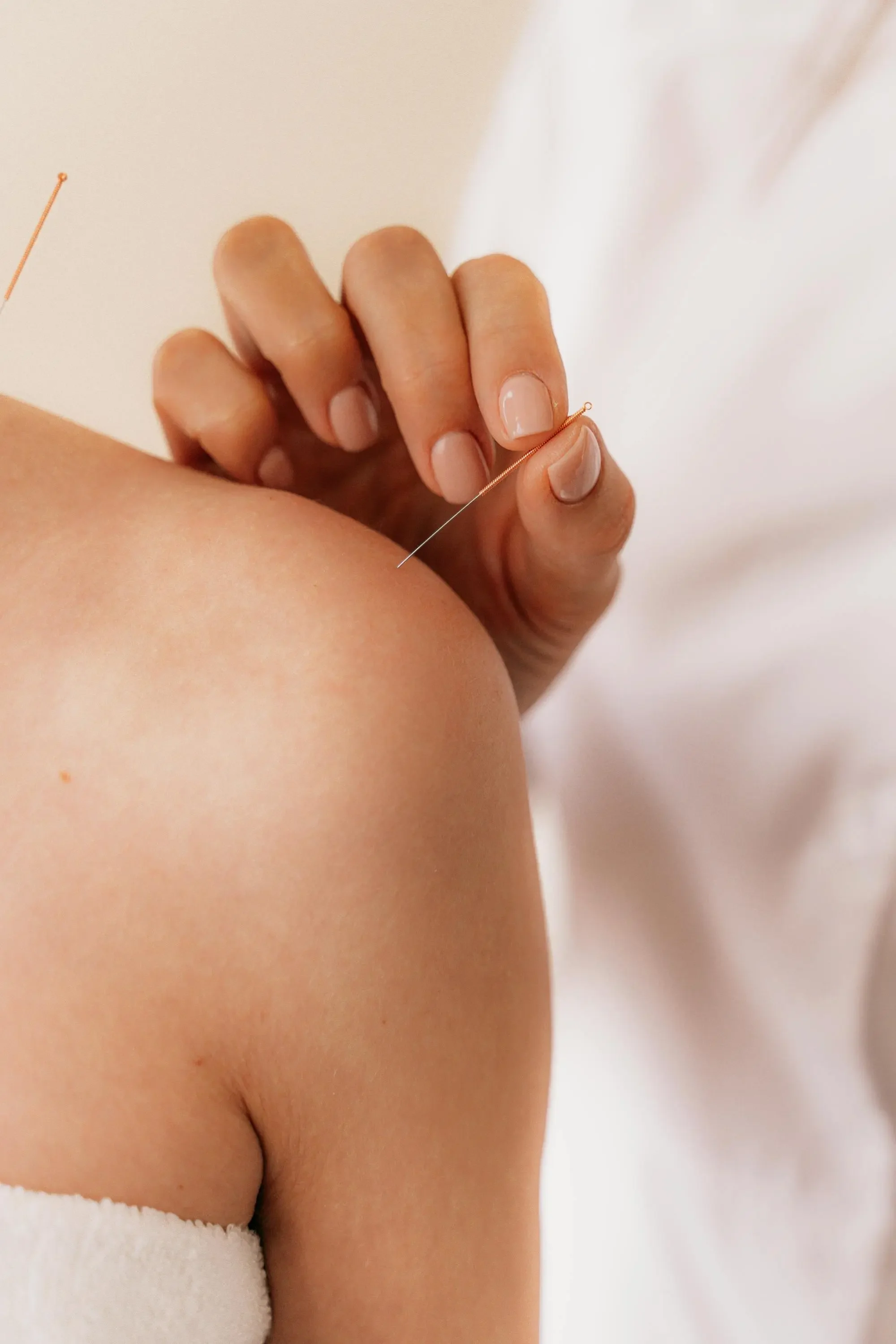
How Acupuncture Supports Your Menopause
Helps the body adapt to hormonal changes more smoothly
Calms the Heart and mind, settling the Shen and easing stress
Supports emotional wellbeing and helps reduce anxiety
Encourages the smooth flow of Qi, the body’s vital energy, helping to relieve tension, headaches and discomfort
Restores balance between Yin and Yang, supporting greater ease through menopause
What the Research Says
-
This meta-analysis pooled 12 randomized controlled trials (869 women) to assess acupuncture for menopause-related symptoms. Across studies, acupuncture was associated with reduced hot flash frequency and severity, improvements in broader menopause symptom scores (including psychological, somatic, and urogenital symptoms), and a modest improvement in vasomotor-related quality of life. Some benefits were also reported up to 3 months after treatment.
Read the article (DOI):https://doi.org/10.1097/GME.0000000000000260
PubMed record:https://pubmed.ncbi.nlm.nih.gov/25003620/PubMed -
In this large, real-world (pragmatic) randomized controlled trial, 209 perimenopausal and postmenopausal women (ages 45–60) with at least 4 hot flashes/night sweats per day were assigned to either acupuncture (up to 20 treatments over 6 months) or usual care with a waitlist. By 6 months, vasomotor symptom frequency fell by 36.7% in the acupuncture group, compared with a 6.0% increase in the control group. Benefits were seen after around 3 treatments, with maximum effects after a median of 8 treatments, and improvements were largely maintained for at least 6 months after treatment ended.
Read the article (DOI):https://doi.org/10.1097/GME.0000000000000597
Free full text:https://pmc.ncbi.nlm.nih.gov/articles/PMC4874921/PMC -
This systematic review and meta-analysis pooled 35 clinical studies (3,014 patients) assessing acupuncture-related approaches for osteoporosis. Overall, the authors reported that acupuncture—particularly warm needling—was associated with improvements in bone mineral density (including lumbar spine and femur measures in pooled analyses), alongside favourable changes in some bone-related blood markers and pain scores, compared with Western medicine alone in the included studies. The paper also notes that study quality and risk of bias varied, so higher-quality trials are still needed to confirm the size and reliability of these effects.
Read the article (DOI):https://doi.org/10.1142/S0192415X18500258
PubMed record:https://pubmed.ncbi.nlm.nih.gov/29614884/PubMed -
In a pragmatic randomised study in Danish primary care, 70 women with moderate-to-severe menopausal symptoms received either standardised acupuncture once weekly for 5 weeks or a waitlist/usual care control. At 6 weeks, the acupuncture group showed significant reductions in hot flushes and sweating, along with improvements in menopause-related sleep problems, and several emotional and physical symptom scores. Improvements were already noticeable by week 3, and only mild, short-lived side effects were reported (no serious adverse events).
Read the article (DOI):https://doi.org/10.1136/bmjopen-2018-023637PubMed
Free full text (PMC):https://pmc.ncbi.nlm.nih.gov/articles/PMC6501989/PubMed

Nutritional Advice
Because acupuncture supports the whole body menopause support works best when it is combined with daily nourishment and steady habits. The food you eat can influence hot flushes sleep mood energy and dryness and it plays a key role in helping the body adapt to hormonal change. Click the button below to explore guidance on nourishing your body with mindfulness and balance to support a steadier menopause transition.