
Tui Na Massage
What is Tui Na massage?
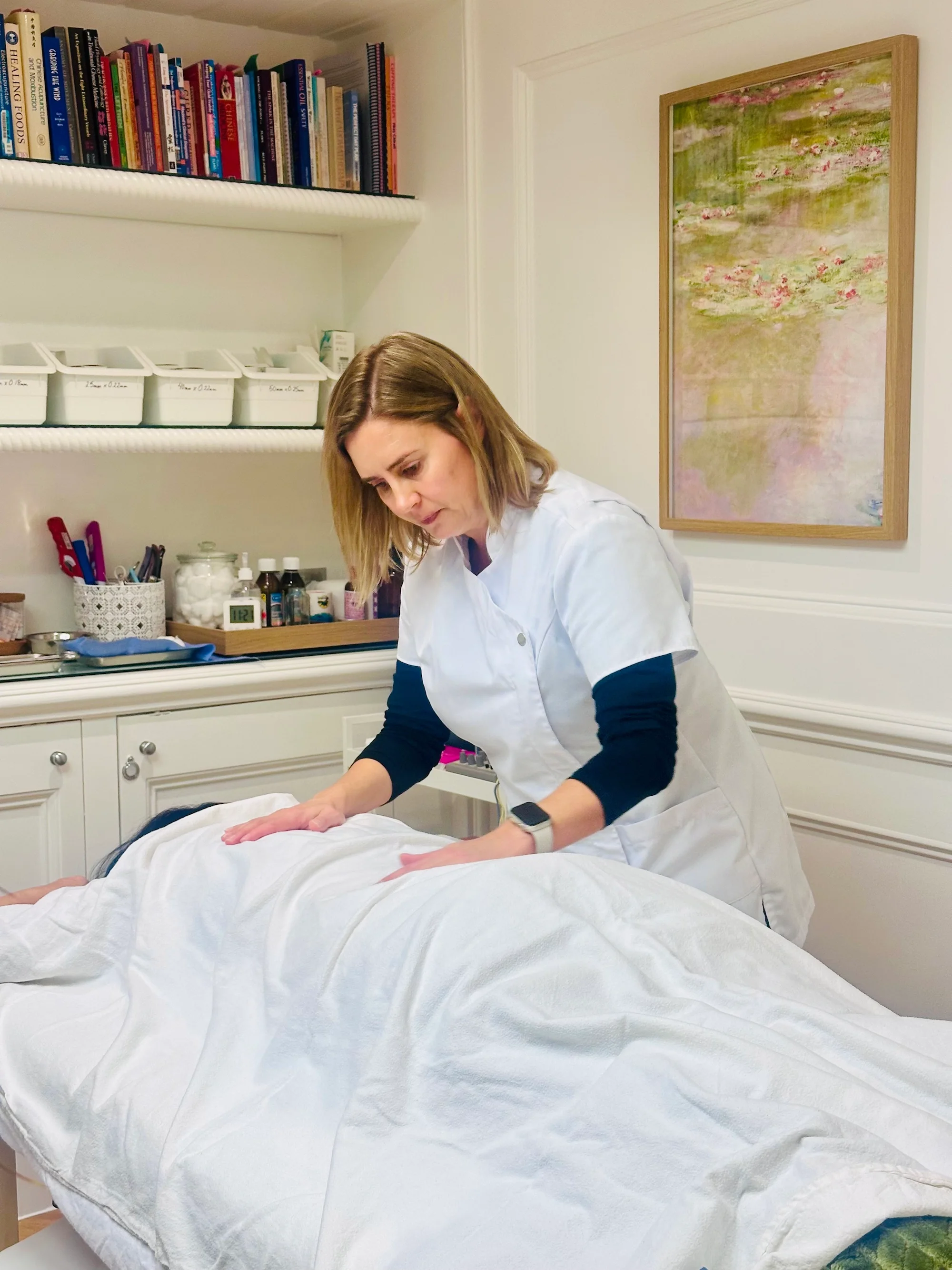
Considered to be one of the "Five Pillars" of Chinese Medicine (along with Acupuncture, Herbal Medicine, Qi Gong and Yang Sheng "lifestyle advice"), Tui Na is much more than just another type of massage. Rather, it is a form of bodywork rooted in Chinese Medicine diagnostics that incorporates specific massage techniques, stretches and joint realignments to support a wide variety of ailments. In Chinese, Tui means "to push" and Na means "to grasp". Roughly translated, this motion of pushing and grasping is the foundation of various Tui Na techniques used to support the body while it heals.
A variety of techniques or "Fa" are employed at different stages within a Tui Na treatment. Some techniques are used in isolation or combined with another technique. A typical treatment will include three stages; adaptive, analgesic and dissipative. While experiencing a Tui Na treatment, you may wish to reflect upon these various techniques and see how your body responds to them.
How is Tui Na different from other types of massage?
As Tui Na relies on Chinese Medicine diagnostics, your practitioner will begin the treatment by taking a full health history as well as looking at your tongue and feeling your pulse. This enables your practitioner to gather a full picture of what may be creating systemic imbalances in your body. Additionally, unlike some forms of bodywork where there is direct "skin to skin" contact, the Tui Na practitioner will often employ Tui Na techniques over a thin sheet that covers the body. This gently stimulates the body's Qi (energetic value) in order to relieve stagnation and release pathogens. Sometimes the practitioner may deem it necessary to apply other techniques that require direct skin contact such as Cupping, Gua Sha or Moxibustion.
What does Tui Na feel like?
Tui Na techniques may evoke a sensitivity that suggests your body is responding to the treatment; however, it is important to communicate with your practitioner at any time if you are experiencing any discomfort. The treatment is meant to be therapeutic and restorative. Tui Na treatments will be performed according to strict health & safety standards that protect both the patient and practitioner.
What conditions can Tui Na support?
As a holistic auxiliary technique, Tui Na on its own doesn't profess to be a "cure-all" treatment. However, it has been found to be effective in supporting the body with the following conditions;
anxiety, stress and depression
arthritis and joint stiffness
chronic pain and headaches / migraines
circulatory issues
digestive irregularities (constipation, diarrhoea, bloating, pain, reflux etc...)
energy levels
injury recovery
menopausal symptoms (hot flushes, emotional irregularities, dryness, joint stiffness etc...)
menstrual symptoms ( pain, cramps, bloating, headaches, irregularity etc...)
musculoskeletal pain, misalignment and posture
sciatica
sleep patterns
What are the benefits of Tui Na massage for women's health?
Tui Na massage offers a range of benefits specifically for women's health, making it a valuable and natural complement to acupuncture and other Traditional Chinese Medicine treatments. By working along the body's meridian pathways, Tui Na helps to restore the smooth flow of Qi and Blood — two foundations of hormonal balance and reproductive health in Chinese Medicine. At NRQi Studio Tui Na massage is offered as part of an individually tailored treatment plan, often alongside acupuncture and other TCM therapies, to provide holistic support for women's health at every stage of life.
The benefits of Tui Na massage for women's health include:
Menstrual health — Tui Na can help to ease painful periods, reduce cramping and bloating, regulate irregular cycles and relieve premenstrual tension and mood changes.
Fertility and pre-conception care — By supporting hormonal balance, improving circulation and reducing stress, Tui Na can be used alongside acupuncture to support those trying to conceive naturally or undergoing IVF or assisted fertility treatment.
Menopause support — Tui Na can help to ease common menopausal symptoms including hot flushes, night sweats, joint stiffness, sleep disturbances, anxiety and emotional irregularities.
Pregnancy and postpartum recovery — Tui Na offers gentle, supportive care during pregnancy for common discomforts such as back pain, fatigue and nausea, as well as supporting postnatal recovery and emotional wellbeing.
Stress and emotional wellbeing — Women are particularly susceptible to the effects of chronic stress on hormonal health. Tui Na helps to calm the nervous system, settle the mind and restore emotional balance, supporting overall wellbeing.
Is Tui Na difficult to learn?
Tui Na is an ancient practice that is considered to be not only a type of therapy but is revered as an art form that takes years of practice and dedication to master. A practitioner's skills develop and evolve with time, along with their ability to diagnose and treat patients. A Tui Na practitioner is not solely focused on mastering the skills but also understanding the principles of Chinese Medicine that form the foundation of this incredible healing modality.
If you wish to learn more about Tui Na and its benefits, the following books are highly recommended.
Tui Na: A Manual of Chinese Massage Therapy by Sarah Pritchard
The Practice of Tui Na: Principles, Diagnostics, and Working with the Sinew Channels by Rob Aspell